
Match times and pitches drift quickly
Even small delays on one pitch can push the whole day back if schedule changes and communication are not managed centrally.

Whether you are planning an indoor tournament, small-sided cup or club event, you need a workflow that keeps teams, pitches, groups and results in sync before and during tournament day.
Free forever in demo mode. No credit card.
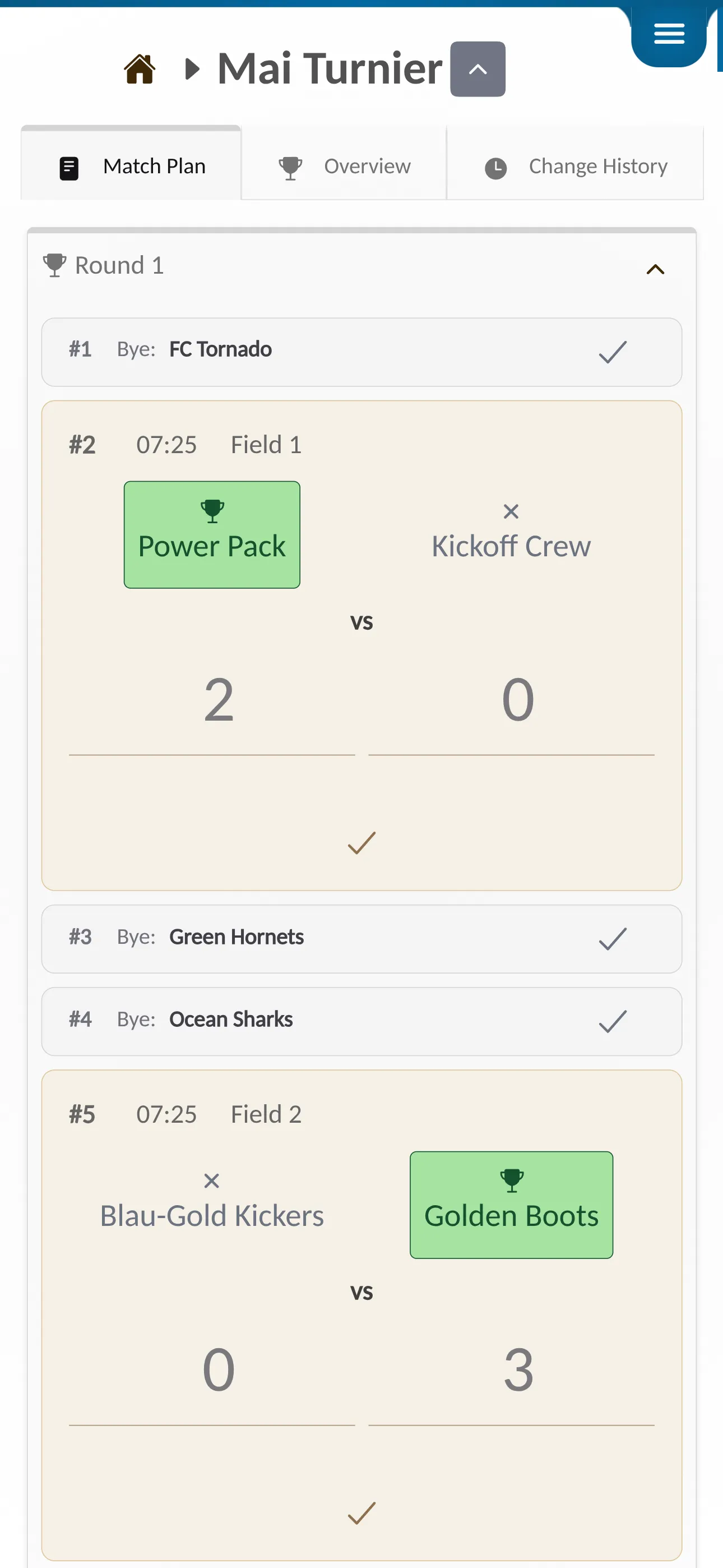
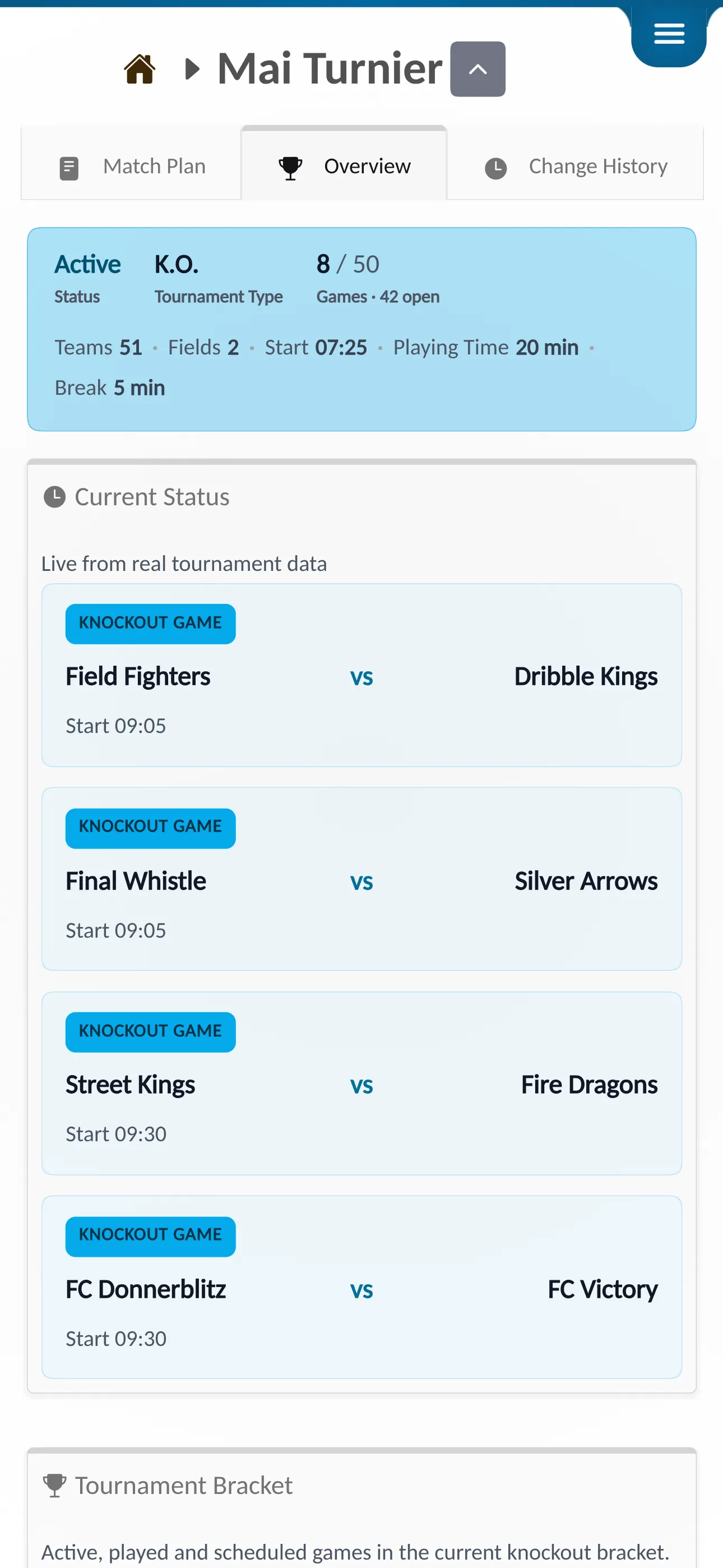
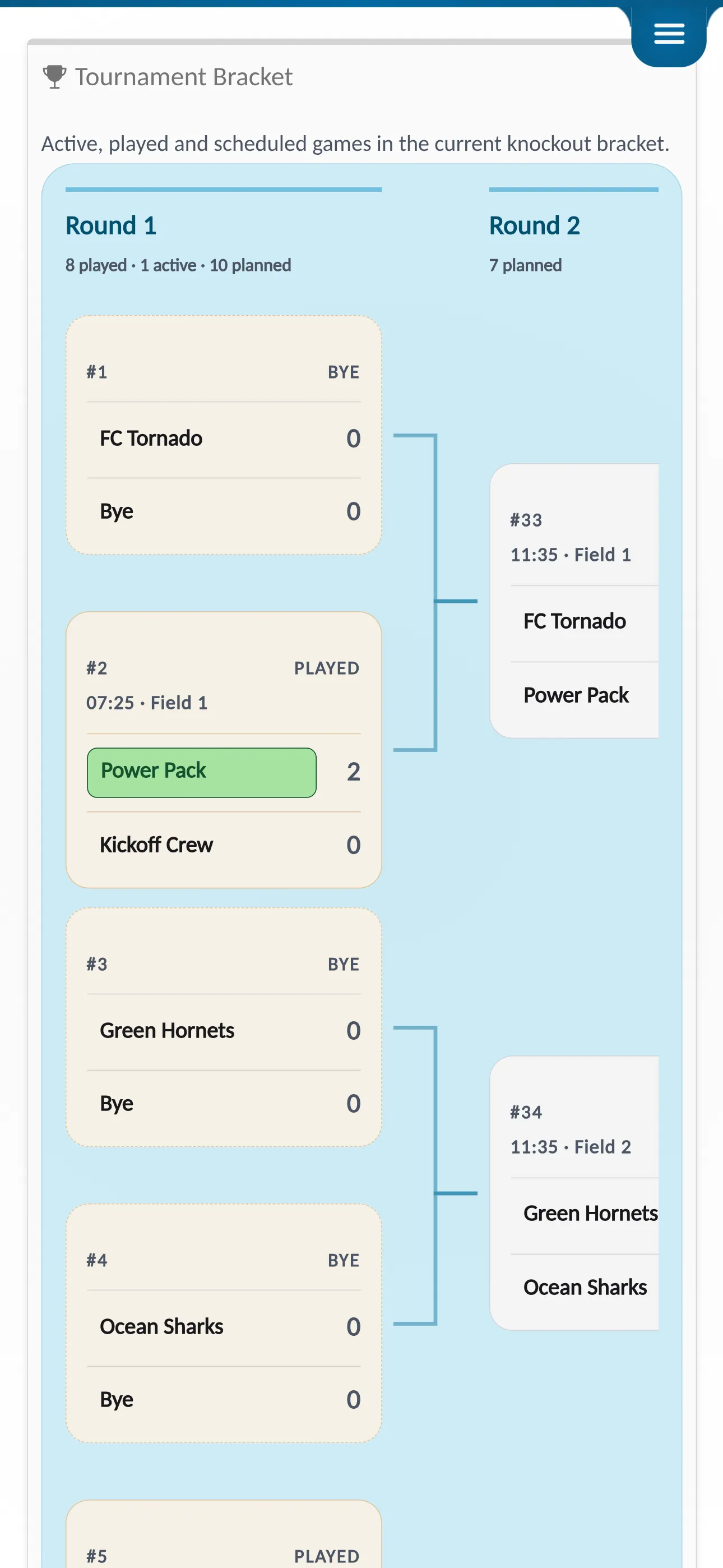
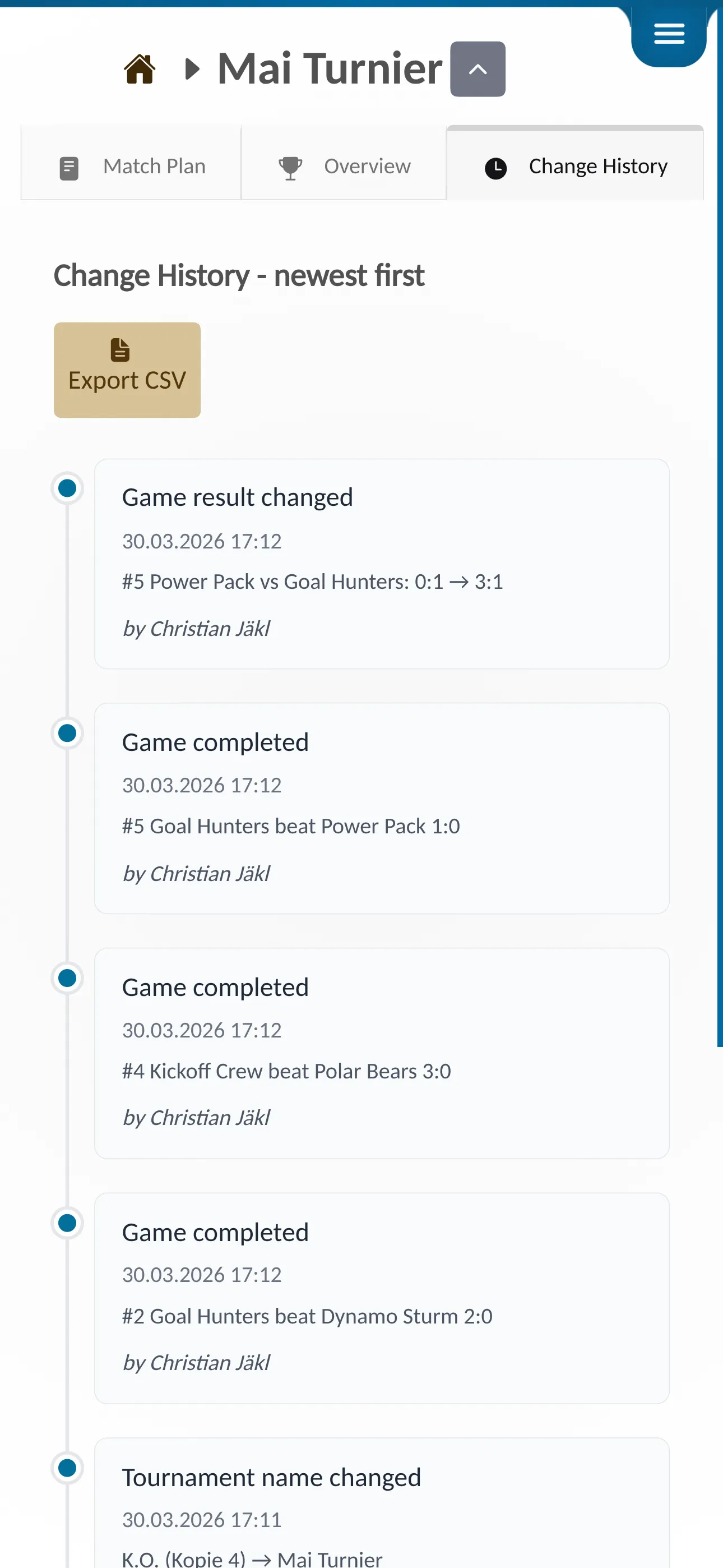
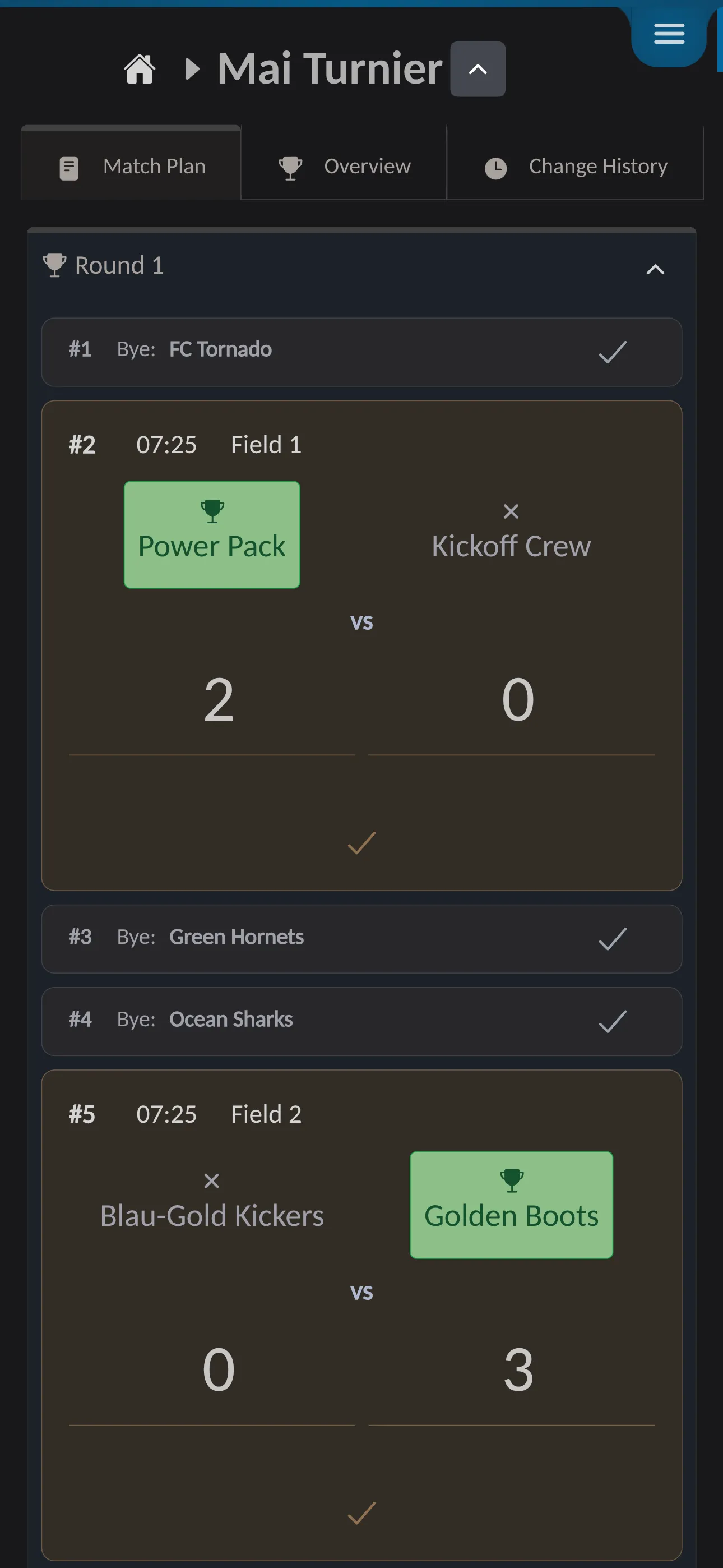
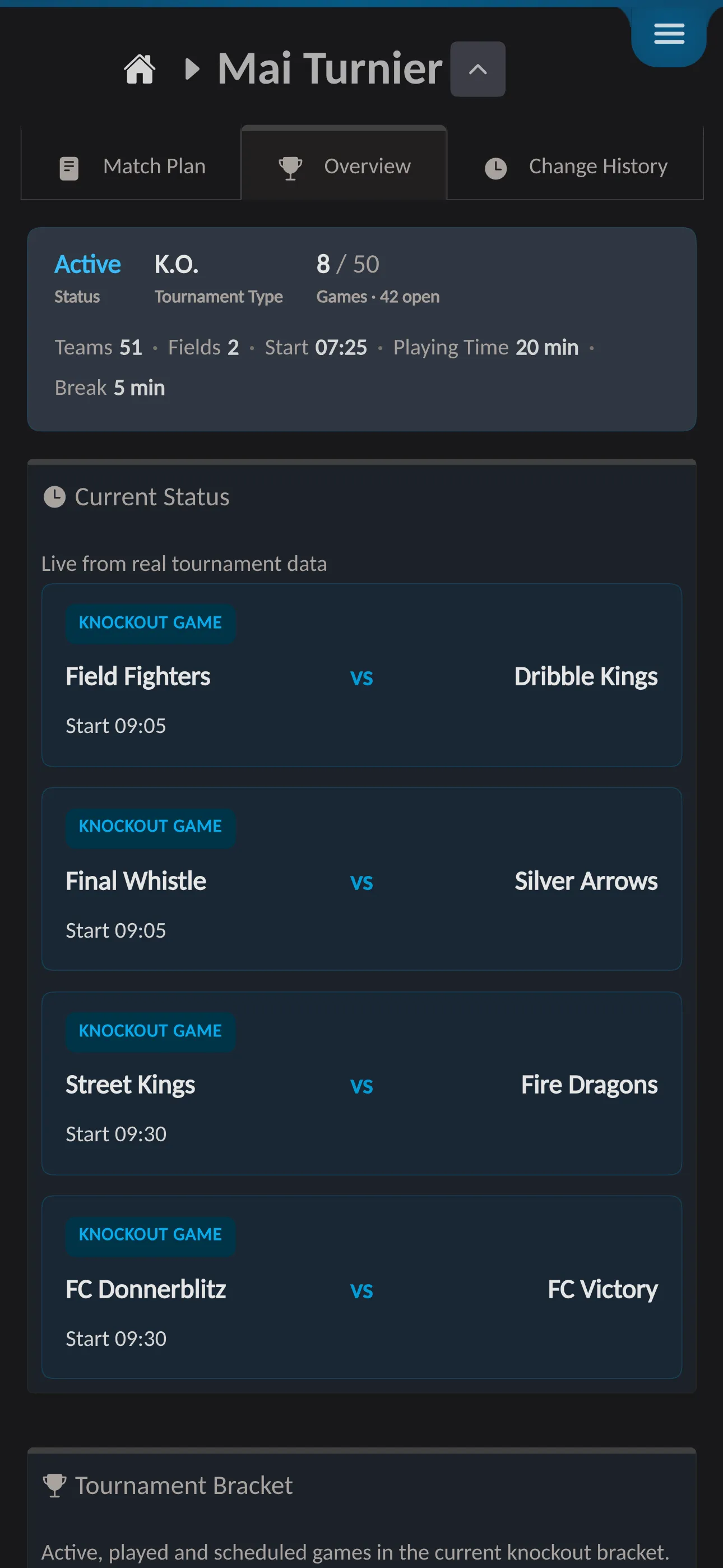
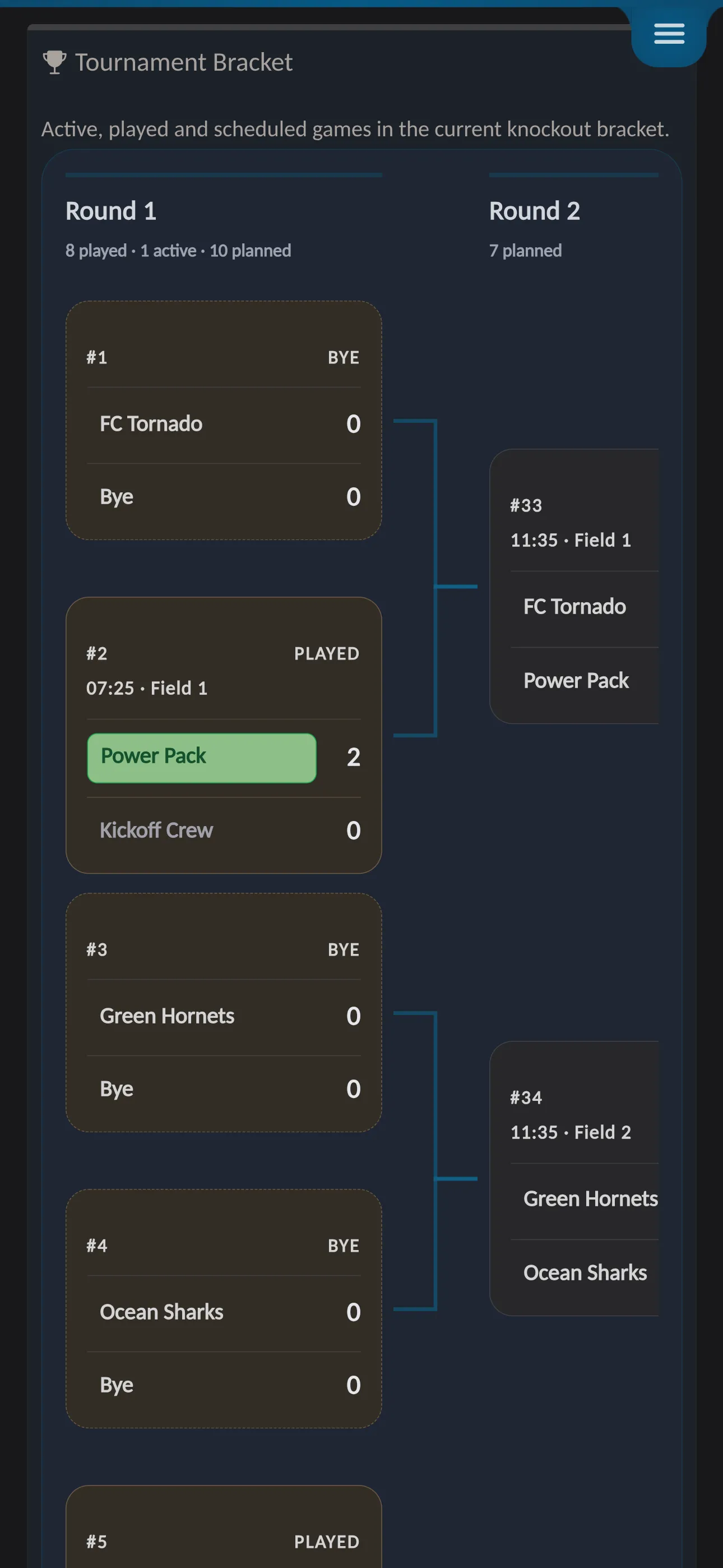
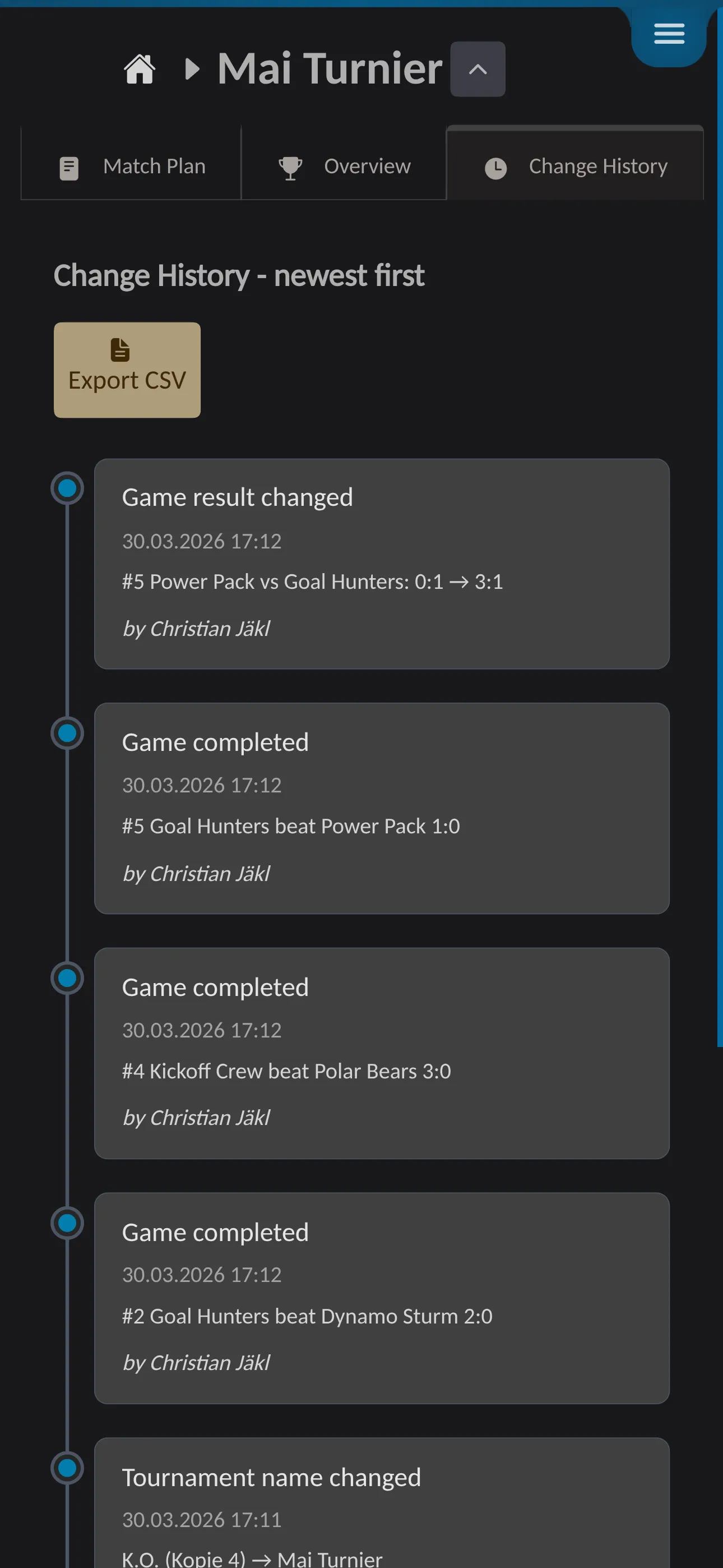
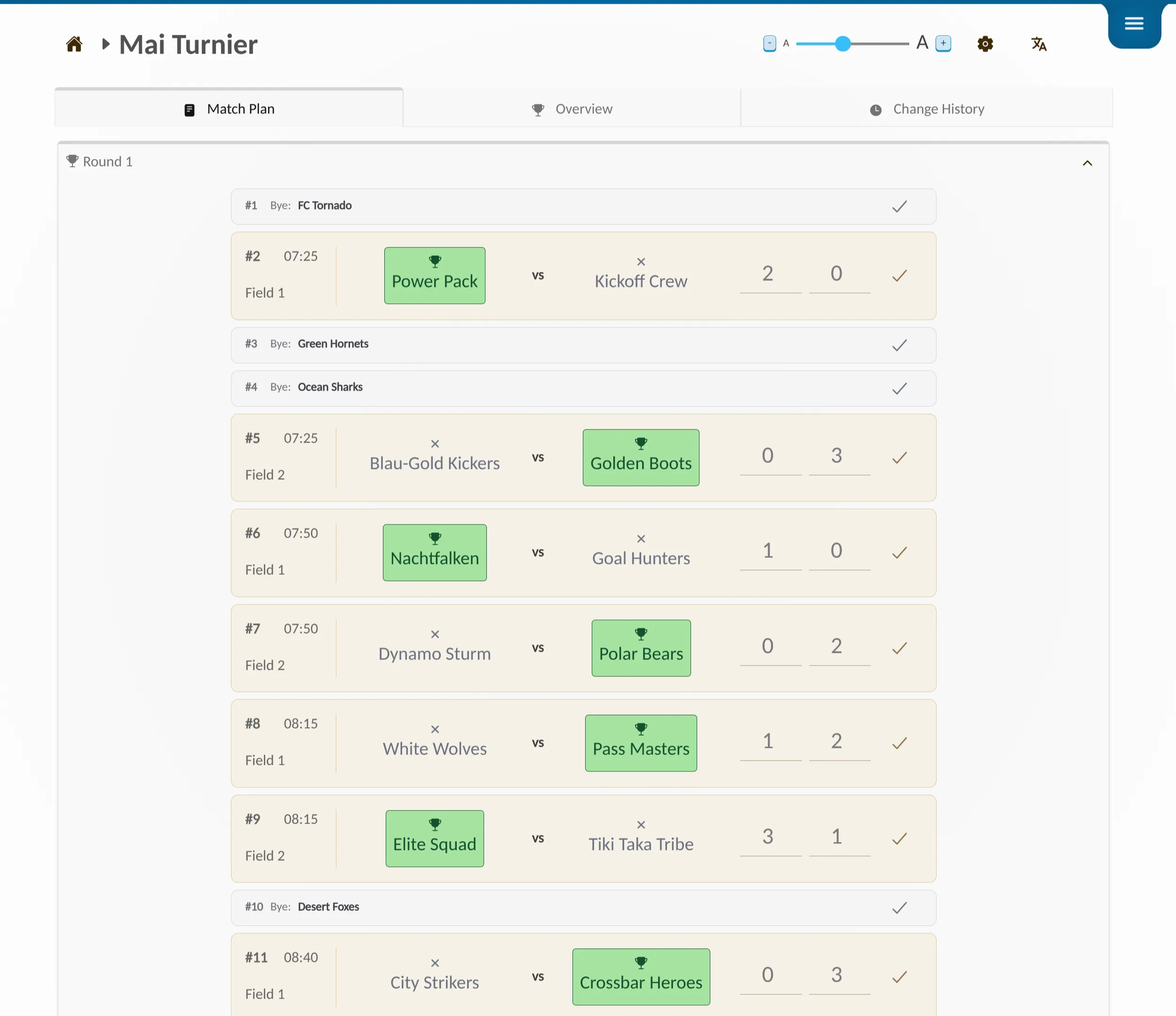
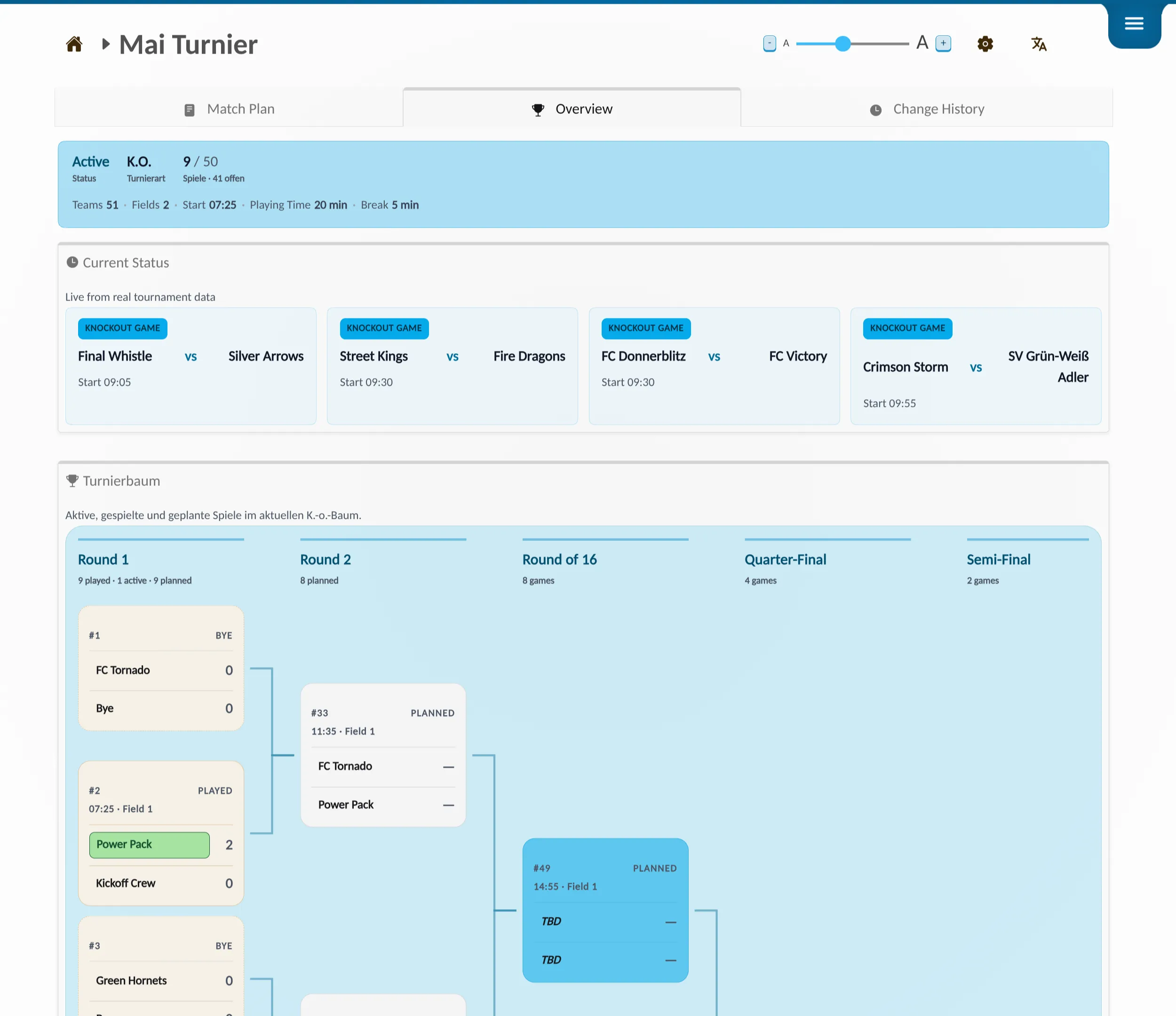
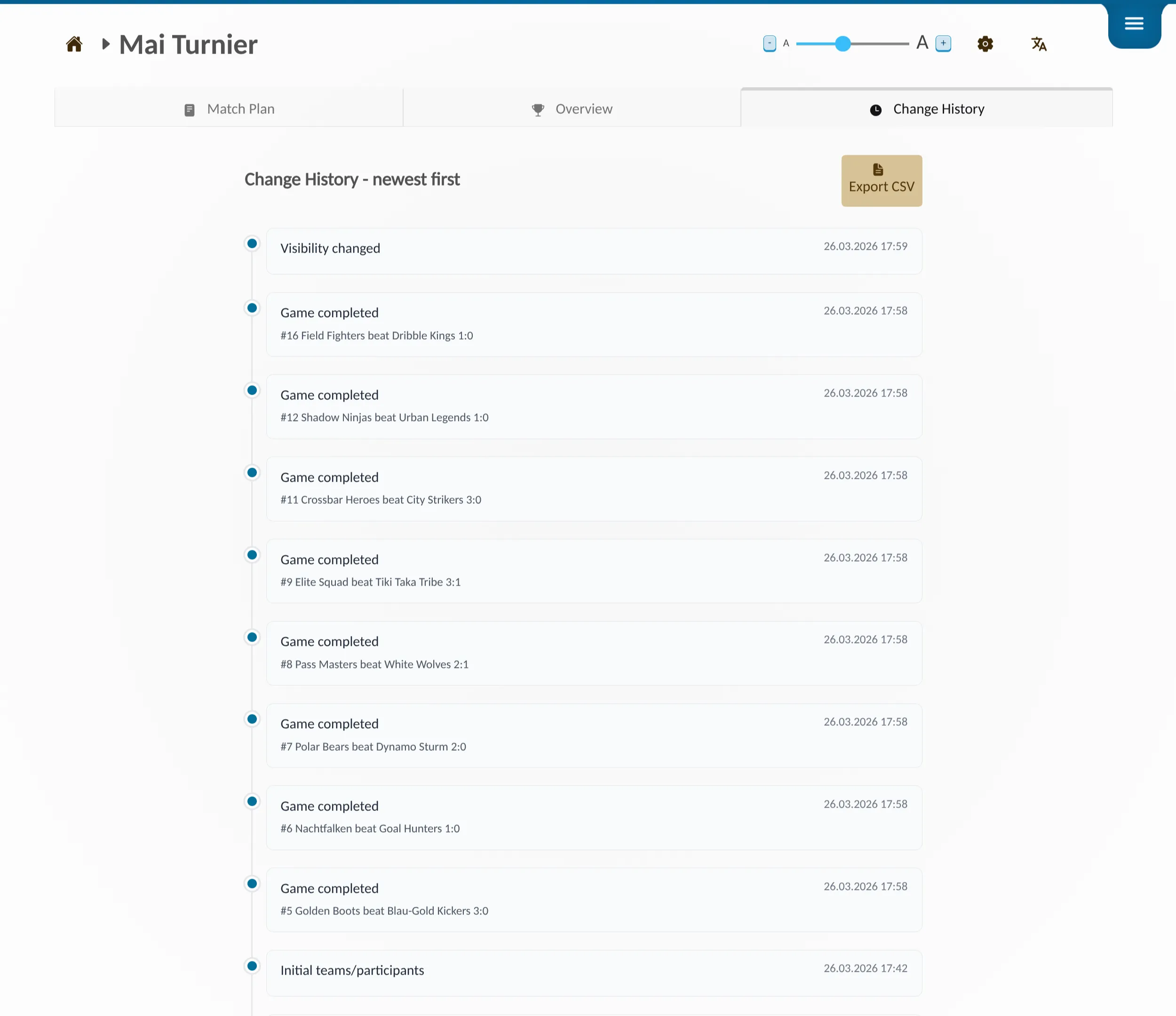
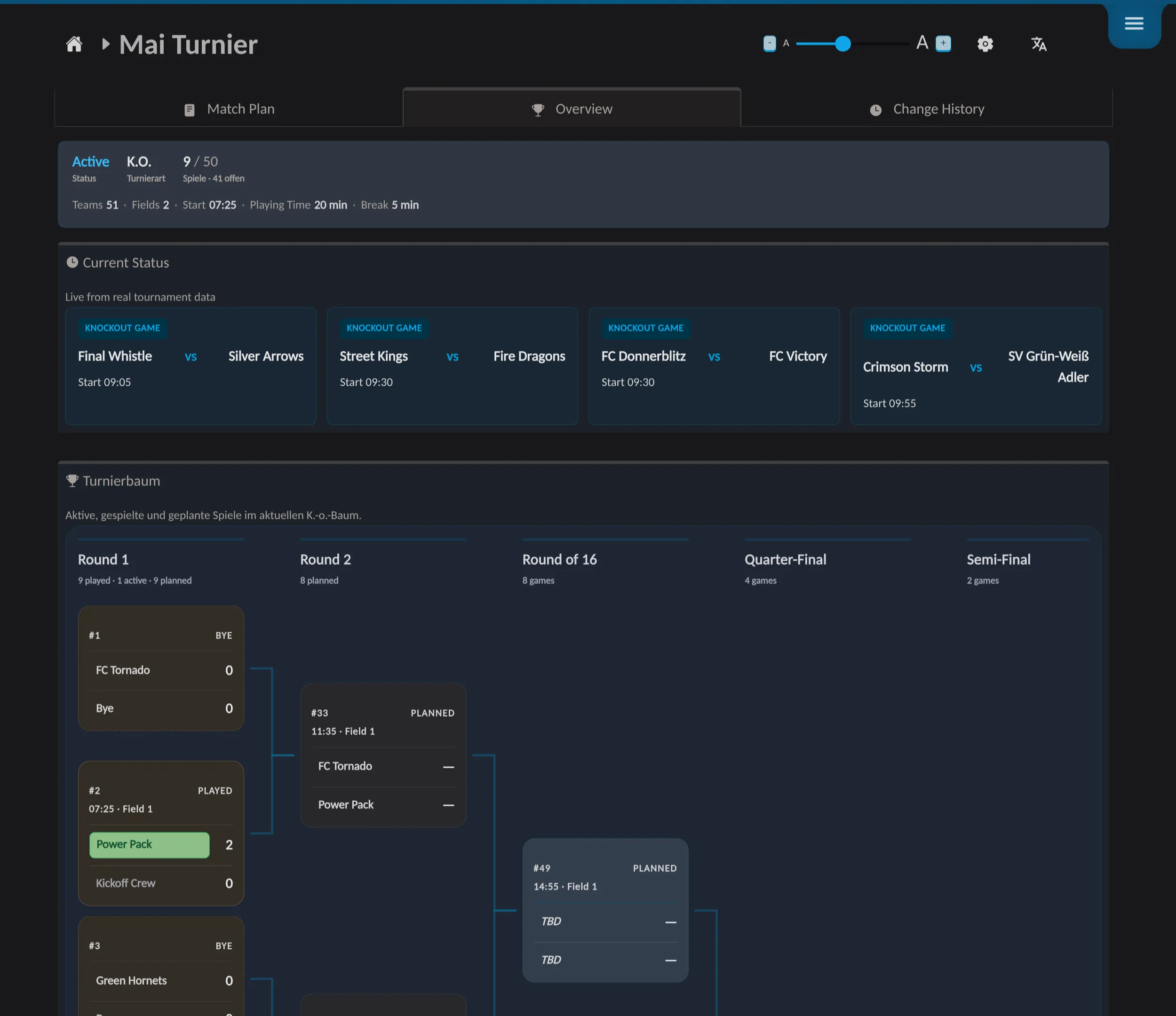
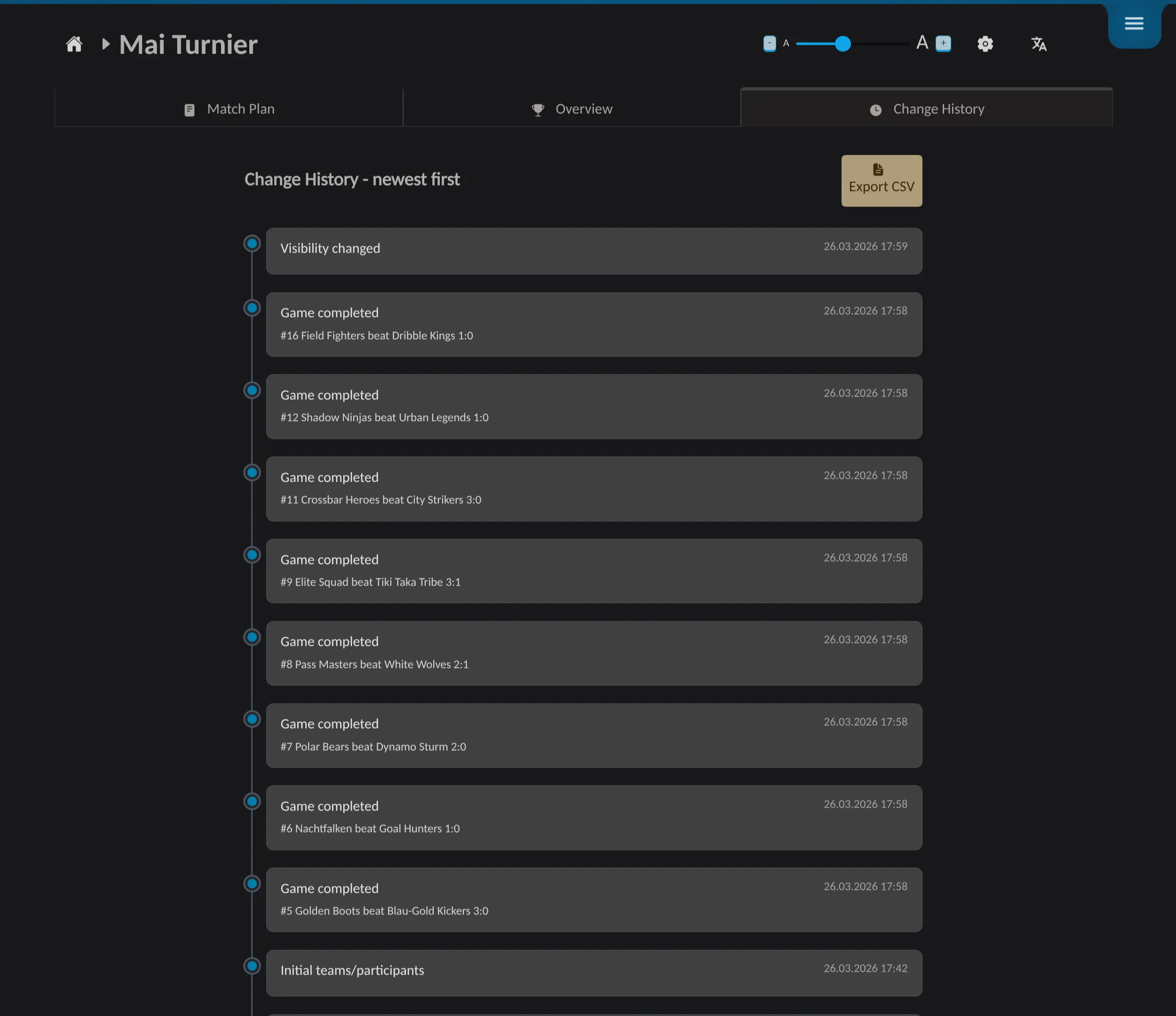
A football tournament sounds simple, but operations get hectic quickly. Multiple pitches, tight time slots, group standings, goal difference and constant questions all need to work together cleanly.
Even small delays on one pitch can push the whole day back if schedule changes and communication are not managed centrally.
Especially in indoor tournaments or preliminaries, it has to stay clear who advances and which pairings are next.
If results, standings and next matches are only shared verbally or on paper, coordination pressure rises immediately.
Knockout, group stage + knockout or round robin should match your team count, time window and available pitches.
Fixtures, rounds and pitch assignments need a workflow organizers, helpers and teams can follow fast.
In football, standings, goal difference and next matches matter constantly, especially before the final stage starts.
When qualification and knockout pairings are mapped cleanly, the final phase stays easy to understand for everyone.
Planning workflow for a football tournament: from the basic constraints through format, registration and schedule to live results – a decision-focused guide for indoor, small-sided and full-pitch events.
Decide on date, venue, match duration, kick-off time and the maximum number of teams. These values determine which format actually fits the day and how many pitches you really need.
Plan with the number of teams that will actually confirm, not your wish list. Indoor tournaments typically run 6–16 teams, small-sided cups 10–14 teams per day.
Knockout for tight time windows, group stage plus knockout for the classic preliminary-and-finals flow, round robin for small fields with high fairness. The format follows from team count, pitch count and match duration.
Capture team name, contact and any seeding hint (last year’s placement, league level). Groups are then drawn so that strong teams are not stacked into the same preliminary group.
Let the schedule build from team count, format and pitch count. Make sure no team plays two games in a row and that there are sensible breaks between preliminary matches.
Decide who enters results and test the public live view for teams and spectators. Goal difference and tiebreaker rules should be written down before the first whistle.
Before matchday: assign referees, plan helpers, print the rule sheet, prepare trophies and check the technical setup. The tournament then starts without last-minute improvisation.
The key is not just writing down a few pairings. The schedule, results and communication also need to hold up once the day gets busy.
| Criterion | Manual / improvised | With Turniermeister |
|---|---|---|
| Adjusting the schedule | Changes have to be patched into lists, boards or chats. | Schedule and tournament status stay current in one workflow. |
| Groups & standings | Goal difference, rankings and qualification need messy manual upkeep. | Results and standings stay central and visible. |
| Next matches | Teams keep asking about pitch, time and opponent. | Upcoming matches can be displayed and shared directly. |
| On-site impression | The event quickly feels hectic and dependent on individuals. | The workflow feels more structured, calmer and more professional. |
For football tournaments with multiple teams and pitches, visibility matters more than a one-time starting plan.
For football events, this simple guide is usually enough to decide.
A strong fit when many teams need to move through a clear bracket in limited time.
The classic setup when everyone should get several matches first but the event should still build toward a real final.
Useful for smaller fields when fairness matters more than keeping the day as short as possible.
If team count, pitch availability or timing are still unclear, settle those basics first. After that, choosing between knockout, group stage + knockout and round robin becomes much easier.
These example configurations show how team count, pitches, format and matchday duration fit together in practice. Treat them as a baseline and adjust them to your venue, match duration and buffer times.
Classic indoor format with 12 preliminary games plus 4 knockout games, 2 × 10 minutes per match. Compact matchday that runs cleanly with two parallel pitches.
Three groups of four, then a knockout stage with the group winners and best runners-up. 1 × 12 minutes per game; well suited to weekend club cups.
Four groups, semi-finals from group winners and best runners-up, final in the evening. 1 × 15 minutes per game; suited to larger club cups or sports days.
Realistic estimate of the total duration as a function of team count, format and match duration. Excludes setup and teardown, includes a 2–3 minute buffer between games.
| Team count | Format | Match duration | Estimated total |
|---|---|---|---|
| 6 teams | Round robin | 2 × 10 min | about 3.5 hours |
| 8 teams | 2 groups of 4 + knockout | 2 × 10 min | about 4–5 hours |
| 10 teams | 2 groups of 5 + knockout | 2 × 10 min | about 5–6 hours |
| 12 teams | 3 groups of 4 + knockout | 1 × 12 min | about 5–6 hours |
| 16 teams | 4 groups of 4 + knockout | 1 × 15 min | about 7–8 hours |
| 16 teams | Pure knockout with placement matches | 2 × 10 min | about 4 hours |
Two parallel pitches roughly halve the pure playing time. Add another 30–45 minutes for opening, awards and unforeseen delays.
No more spreadsheets! Create brackets, add teams, share results live – all in one place.
Our participants love the live ticker. And I love that I no longer have to send everything via WhatsApp.
Our tournament for 24 teams was set up in 5 minutes. Super easy and results were instantly visible for everyone.
One plan, everything included. Test free forever in demo mode.
All features included
Coming soon
No risk: in demo mode you test Turniermeister free forever – one tournament per type, kept private. Public tournament pages are a Premium feature.Start demo mode
For associations & large events with specific requirements – we'll put together a tailored offer.
Help shape Turniermeister as an early founding member.
You are not just buying access — you are helping shape the product. As a Founder, you get a direct line to the team, and your feedback helps decide what we build next.
Be one of the first 50 and help shape the tournament tool you have always wanted.
Compared with 298 € for two years of regular Premium.
Get Founder EditionAvailable until the public launch.
After that, the Founder Edition will no longer be available.
Limited to 50 Founders
If you run tournaments regularly and never want to fight with spreadsheets again, this is for you.
Your subscription doesn't just benefit you – your invited participants also benefit for free.
Available for all participants in your tournaments – at no extra cost.
With Premium you can invite co-organizers. Participants can always follow tournaments for free.
Full access to all features of your plan.
Helps you manage tournaments – perfect for helpers.
Can follow tournaments – ideal for players and spectators.
Usually, group stage + knockout is the best fit because teams get several guaranteed matches while the event still builds toward semi-finals and a final.
Yes. Indoor tournaments especially benefit from clear time slots, visible group standings and a clean transition into the final stage.
The key is entering results centrally and keeping group standings visible throughout the day so qualification always stays easy to understand.
Yes. Results, standings and next matches can be shared online so people on site need fewer ad-hoc updates.
Yes. Whether it is a youth club event, hobby cup or company tournament, a clear digital workflow helps a lot once several teams and pitches are involved.
Try Turniermeister for free and organize teams, fixtures, group standings and knockout rounds without spreadsheet chaos or constant verbal updates.
Free forever in demo mode. No credit card.